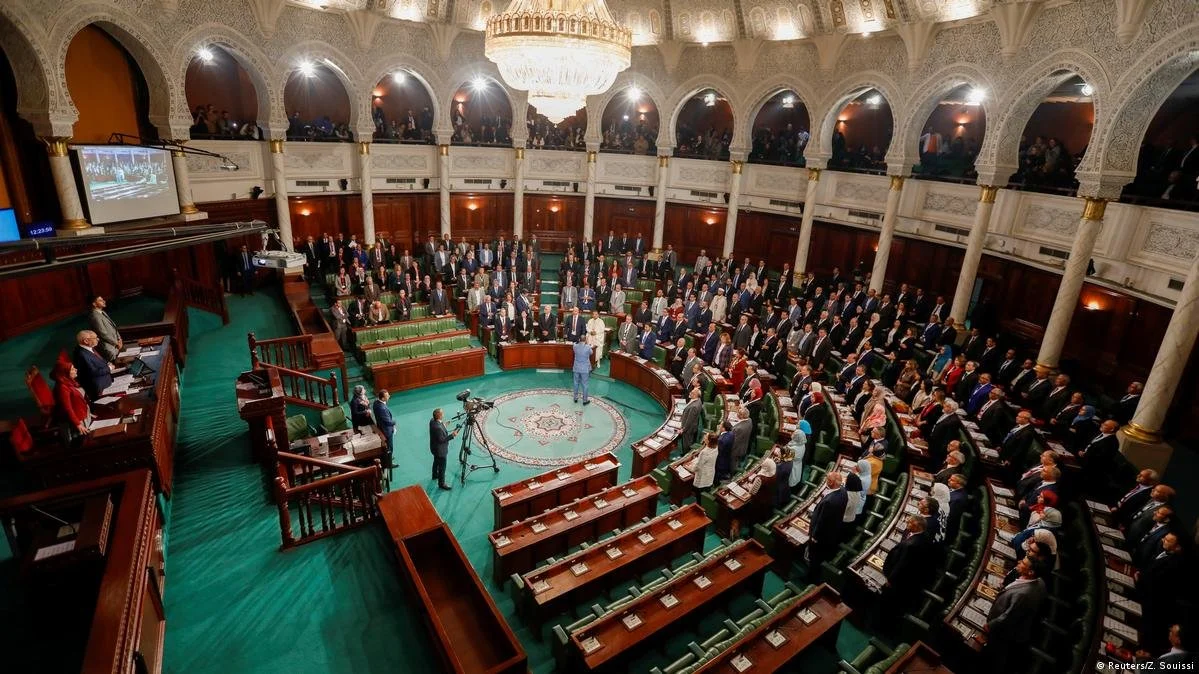
The Rise and Fall of Tunisian Democracy: Populism, Polarization, and the Perils of Power-Sharing
Forthcoming in October 2026, Cambridge University Press
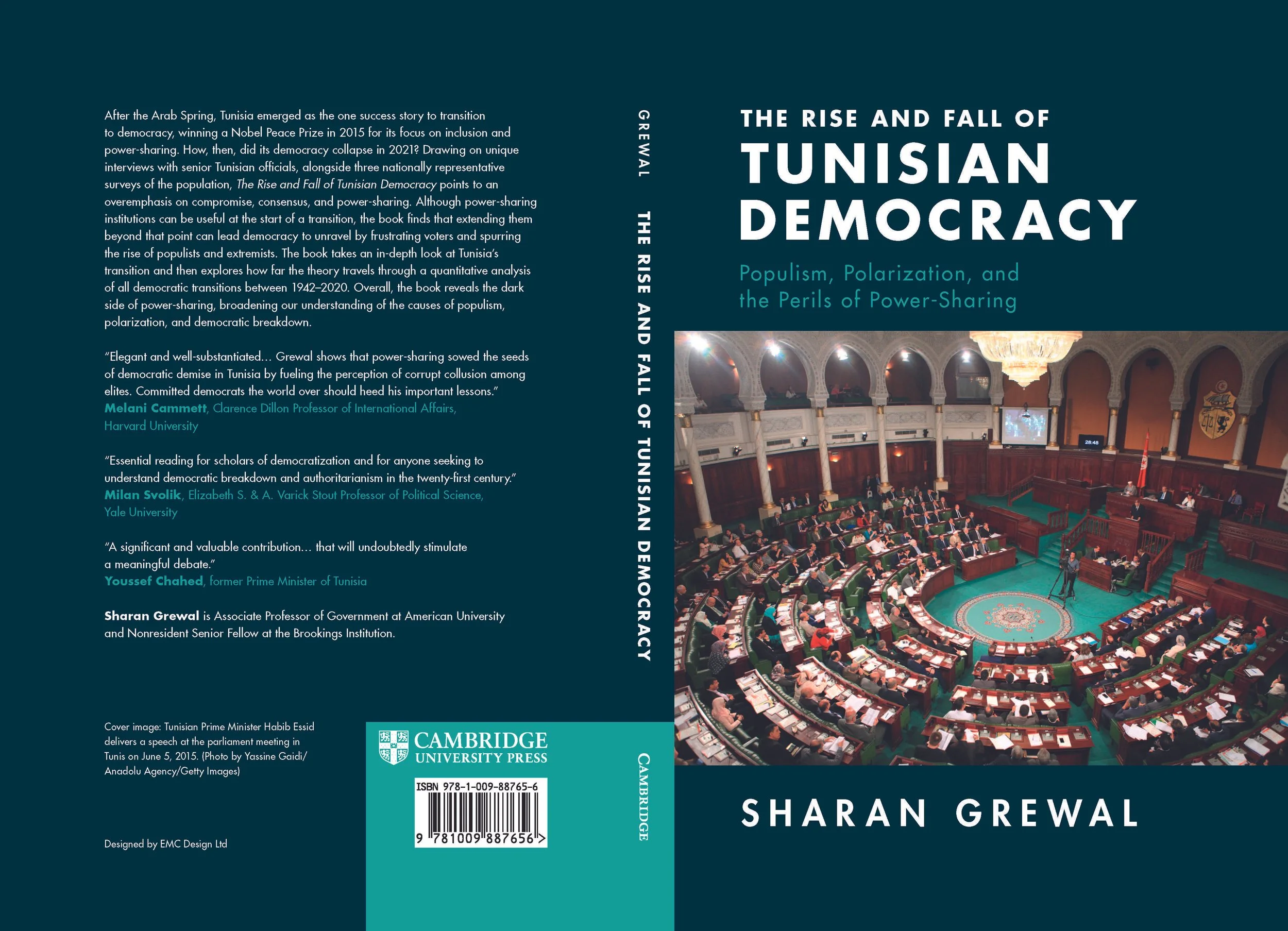
Abstract:
After the Arab Spring, Tunisia emerged as the one success story to transition to democracy. But after ten years, Tunisia’s democracy collapsed in a rapid power grab by the elected president, Kais Saied -- and surprisingly, with widespread applause from the Tunisian people.
In this book, I argue that the same factor -- power-sharing -- drove both the rise and fall of Tunisian democracy. Power-sharing institutions like grand coalitions and unity governments can be useful at the start of a democratic transition in order to generate consensus over the rules of the game. But extending power-sharing beyond that point can lead democracy to unravel. Power-sharing frustrates the voters of each party, and risks the party system collapsing in favor of populists and extremists.
In Tunisia, despite establishing a new constitution and electoral law in 2014, the major political parties decided to continue governing together in another grand coalition between 2015-2019. Frustrated with their choice, many Tunisians turned to new, hardline parties on either end, worsening polarization. Moreover, many others turned instead to populists like Kais Saied, who labelled the entire system as corrupt. Although designed to save the transition, the grand coalition instead helped produced both the populism and the polarization that would fuel public support for Kais Saied’s takeover in 2021.
This book illustrates this argument through 150 interviews with Tunisian officials and three representative surveys of the population. It then probes the generalizability of the theory through a cross-national analysis of grand coalitions in all democratic transitions between 1942-2020. Overall, the book reveals the dark side of power-sharing, and contributes to our understanding of the causes of populism, polarization, and democratic breakdown.
Advanced Praise

After the Jasmine Revolution, Tunisia’s key political actors and their societal allies were commended for their commitment to power-sharing, which enabled the country’s successful democratic transition. In his elegant and well-substantiated argument, Sharan Grewal shows that power-sharing sowed the seeds of democratic demise by fueling the perception of corrupt collusion among elites, creating space for populist authoritarian outsiders to take over. While some have warned about the perils of ethnic power-sharing for governance in divided societies, Grewal is among the first to show the dangers of these political arrangements for democratic transitions more generally. Committed democrats the world over should heed his important lessons.
Melani Cammett, Clarence Dillon Professor of International Affairs, Harvard University

Sharan Grewal’s The Rise and Fall of Tunisian Democracy challenges the conventional wisdom that power-sharing promotes democratic consolidation. Drawing on elite interviews and original survey experiments in Tunisia—the Arab Spring’s sole democratic success story—as well as cross-national analyses of democratic transitions, Grewal shows how grand coalitions can instead fuel populism and polarization, ultimately undermining new democracies. The Rise and Fall of Tunisian Democracy is essential reading for scholars of democratization and for anyone seeking to understand democratic breakdown and authoritarianism in the twenty-first century.
Milan Svolik, Elizabeth S. & A. Varick Stout Professor of Political Science, Yale University
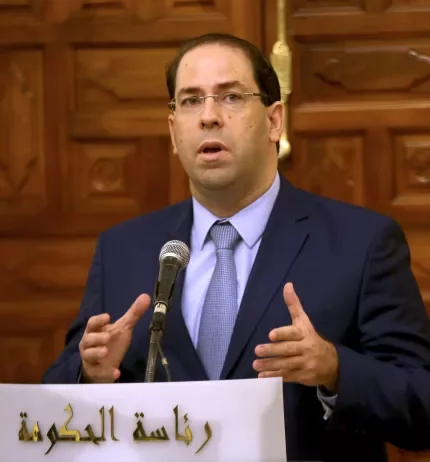
In this book, Sharan Grewal offers a novel perspective on the complex issue of Tunisia’s transition to democracy. The work constitutes a significant and valuable contribution, whether or not one agrees with its conclusions. It invites readers to engage in reflection and will undoubtedly stimulate a meaningful debate.
Youssef Chahed, Former Prime Minister of Tunisia
Recorded Talks
American University in Beirut